What did Sam Altman say about AI's tradeoffs?
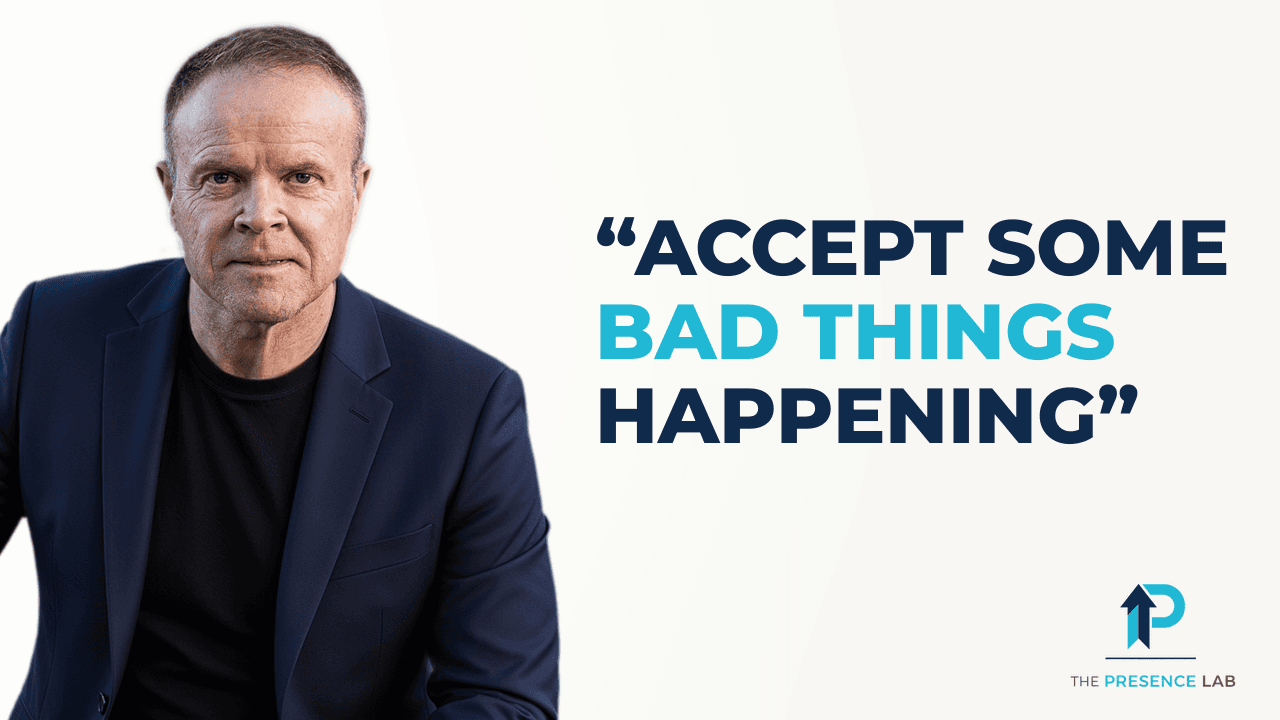
Sam Altman, the CEO of OpenAI, told POLITICO's Decoded in early October 2026 that "the world should accept some bad things happening for the benefits of this technology and people having the agency." He said it when asked where OpenAI differs from Anthropic, and the disagreement is about how much risk society should tolerate and how tightly the technology should be controlled.
His argument is that trying to eliminate every scam, every hack and every misuse would restrict a technology people also use for enormous good, and would hand control to a small number of companies deciding who gets access. He also drew a line. He separated those bounded, everyday harms from what he called "the really catastrophic risks," including a "serious loss of control" to AI, and said he does not accept those.
It was an unusually honest sentence, and he deserves credit for saying it. The reaction raises a bigger question for every leader with a hard truth to tell, whether that truth is about artificial intelligence, a layoff, a price increase or a cut to customer service hours.
Why isn't courage enough to deliver a hard truth?
Courage is necessary, and it's also incomplete. The usual advice is to find your nerve, pull the bandage off and say the hard thing. A leader can be brave and still be asking people to carry something the leader would never carry. That's why the work starts before the message.
How do you tell fear from conscience before a hard announcement?
Notice the tension, slow down, breathe, and ask one question: am I bracing for people who won't like hearing this, or am I asking them to accept something I haven't accepted myself?
Andy Stanley teaches leaders to pay attention to the tension. When something we're considering creates tension inside us, his counsel is to stop and look at it instead of pushing past it or running from it.
The tension Dale describes shows up before he's opened his mouth: wanting to go over the wording one more time, make the message a little easier to deliver, find a reason to wait until next week. The nervous system doesn't know the difference between an audience that's going to be angry and a decision that deserves more scrutiny. Both feel the same from the inside.
When it's fear, the conversation is part of the job: prepare, regulate and have it. When it's conscience, pushing through is the wrong move, because the decision needs work before the message does.
Fear tells me they won't like hearing it. Conscience tells me I wouldn't accept it. And the work is knowing which one is talking.
Who pays, who decides, who answers?
These are the three questions every tradeoff has to survive.
Who pays
Which harms, carried by which people, with what choice in the matter.
Who decides
Who gave the person pushing for the tradeoff the right to set what everybody else has to live with.
Who answers
Whose name is on the outcome when the safeguards fail.
Altman's sentence makes a useful case study because of who carries the cost in it: the world. The benefits of a technology like this may be enormous and widely shared. The costs arrive one person at a time, a retiree on the phone with a cloned voice that sounds exactly like her grandson, a small business owner locked out of a hacked account on payroll day. His larger argument may well survive all three questions, and a candid sentence still has to be ready for them.
Illustrations, not reports about specific people.
A small version shows up in ordinary life. Stuck in a line that seems to exist for no reason, or a phone tree that keeps saying the call is important while keeping you from a human being, it's fair to ask whether the CEO of that company would put up with it. Plenty of executives work hard to see what their customers see. The question is still useful, because it shows how easy a decision becomes when somebody else lives with the inconvenience.
Do employees notice when leaders' words and actions don't match?
Yes, and in one well-known study it showed up in profits. Tony Simons of Cornell's School of Hotel Administration and Judi McLean Parks surveyed more than 6,500 employees at 76 Holiday Inn hotels in the US and Canada, asking whether their managers' words and actions lined up. Hotels where employees strongly believed their managers followed through on promises and demonstrated the values they talked about were substantially more profitable than hotels where managers scored average or lower. A one-eighth point improvement on the five-point scale was associated with profit higher by 2.5 percent of revenues, more than $250,000 a year for an average-sized hotel. The study was published in Harvard Business Review in September 2002.
The finding is correlational. It shows an association, not proof that word-action alignment causes profit. Simons calls the quality behavioral integrity.
Dale's coaching read: employees keep score every day by watching whether the cost of a decision travels upward or stays with the people who have the least power to change it.
What should leaders do before writing the announcement?
Fix the decision first. Picture a leadership team deciding to cut customer support hours. The financial problem is real, they've looked at the alternatives, and this may be the least damaging option on the table. Before anyone writes the announcement, that team should try getting help under the new schedule, know who gets stranded when a problem shows up fifteen minutes after the phones close, and decide in advance the point where they'd reverse course if the damage runs worse than expected.
A hypothetical team, not a real company.
That's an integrity conversation, and it belongs before the communications team ever opens a blank document.
If the decision can't answer who pays, no script will save it.
What is a cost sentence?
A cost sentence answers who pays, who decides and who answers in the same breath, so the context can't be separated from the cost.
In Altman's interview, his limit on catastrophic risk was part of the conversation, and it didn't travel with the headline. The cost went around the world in one sentence, and the boundary stayed behind in another. Every executive who has been quoted out of context knows that fear, and the fear is rational.
The typical announcement
Leads with faster service and better access, and somewhere near the bottom promises that customer satisfaction remains the top priority.
A cost sentence
"We've decided to use this system because it will get most customers answers faster. It will sometimes get things wrong, and customers will feel that. We're responsible for fixing those mistakes, and if we can't catch and correct them reliably, we'll stop expanding it."
The debate about whether the system is ready continues after a statement like that. What changes is that people know the benefit, who might pay, who made the call, and a limit they can hold the company to six months from now. Somebody can still clip it. The difference is that the clip carries the cost and the responsibility together, so the most quotable piece of the statement is also the most honest one.
A hypothetical company, not a real announcement.